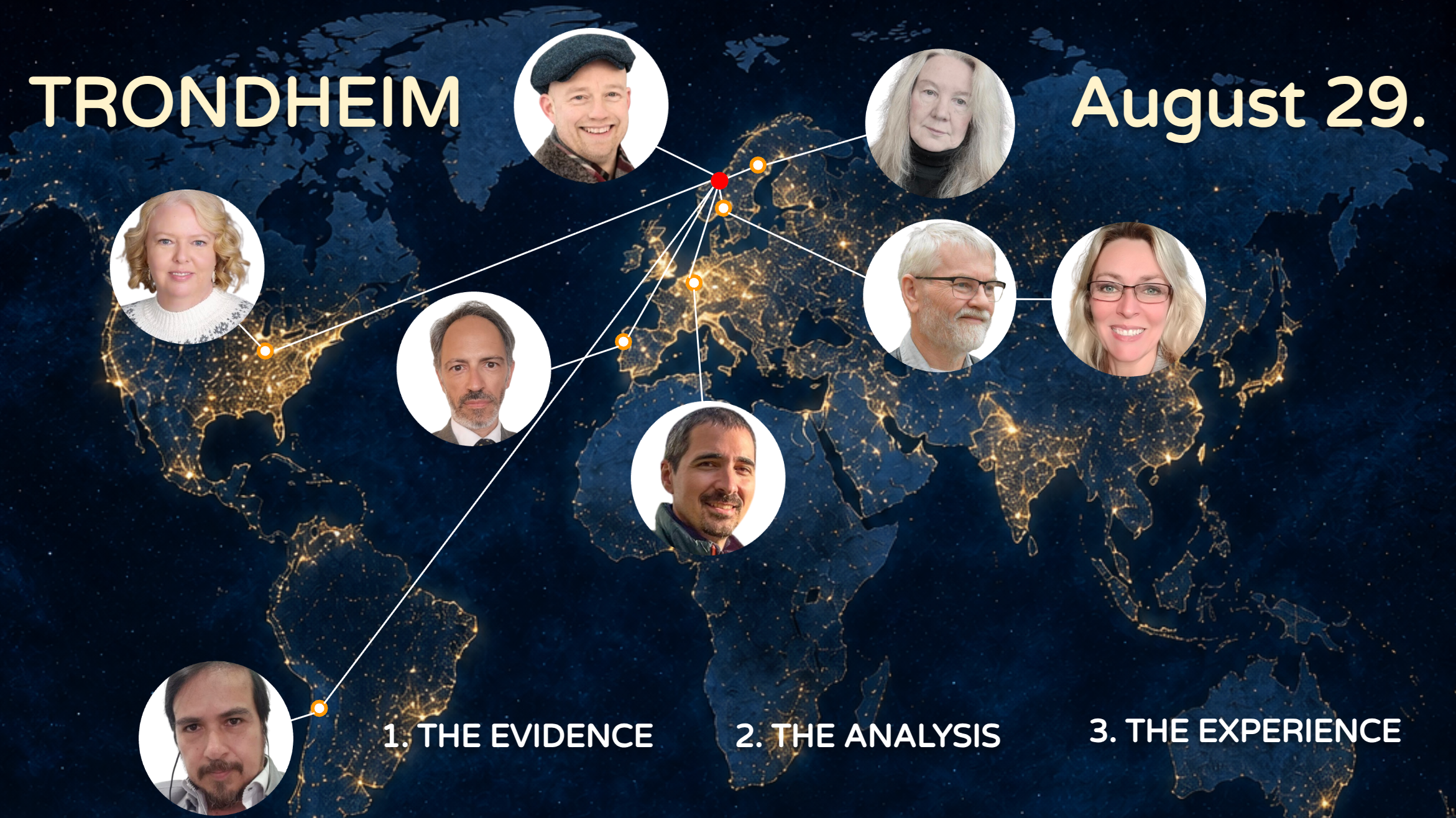
March 20th, 2026 marks the second anniversary of the historical meeting about “UAP in European Airspace”, organised at the European Parliament building in Bruxelles, which was baptized as the first “European UAP Day”.
This may be a good opportunity to resume what European developments of the UAP scene have happened in the twelve months elapsed since the previous anniversary.
On April 10th, the shared appeal for the new European Parliament to take action on UAP in relation to their aims, values, mandates and priorities (which had been signed and submitted by the representatives of 15 national UAP organizations in October 2024), generated a wider public support campaign: UAP Coalition Netherlands called on citizens and organizations to jointly exert pressure on the European Parliament, by writing to each one’s Member of the new EuroParliament,.asking to take concrete measures toward a greater transparency and serious research about UAP, such as Data collection (a central European system), Scientific research (funding for multidisciplinary studies) and Policy integration (aviation and safety protocols).
As it will be noticed, the Dutch organization UAP Coalition has constantly been on the forefront of the initiatives toward European Union institutions, indeed.
On April 30th, UAP Coalition representatives had the first meeting with EuroParliament member Fabio De Masi (Germany), who had asked a Parliamentary question to the EU Commission about what information was known about UAP in connection with the critical infrastructure of member states, in December. During the two hour meeting, several critical issues were discussed: Stigma & Mental Health (the psychological impact on pilots and professionals and the need for a safe reporting culture), Flight Safety (the risks of unknown phenomena in European airspace); Cooperation (concrete actions for greater transparency and cooperation at EU level). Those same topics were raised during another meeting of UAPC officers with a MEP, Lukas Mandl (Austria), on September 24th.
On July 20th, European ufology was put on stage of the annual symposium held by the Mutual UFO Network (MUFON) in Cincinnati (USA): Edoardo Russo (Italy) was the invited foreign representative of the year, talking about “New Perspectives in UAP Studies from the Old Continent”: having more than 40 different countries (speaking dozens of different languages) has brought communication difficulties but also a great variety and richness of approaches and initiatives, which were presented to the unknowing American fellows, including: augmented reality tools for field investigation, cognitive psychology interview techniques, new software packages specifically devised for UFO photo analysis and for automated IFO identification, case classification by text mining and machine learning, new integrated systems for automatic sky monitoring & UAP detection, massive digitization of UFO literature, search engines for specialized bibliographies, A.I. tools for archival purposes, UFO ChatBots.
On September 10th, a collective feedback to the European Commission for the European Research Area (ERA) Act. was submitted by UAP Coalition and signed by 24 scientists and researchers from 14 countries, in another shared initiative sponsored by UAP Check network. This legislative initiative should ensure a resilient and inclusive European Research Area and the contribution was focused on a fundamental issue : stigma as a systemic barrier, discouraging researchers from applying for funding and hindering access to essential research infrastructures.The document offered four concrete proposals to the European Commission: Promoting curiosity (encouraging open and unbiased research); Anti-stigma Guidelines (development of frameworks for assessors and funders); Support for Exploratory Research (creating space for controversial or marginalized fields); Inclusive Networks (stimulating interdisciplinary collaboration); Fair Access (ensuring access to infrastructures, regardless of the research domain). In the following months, more researchers joined the initiative and the total of signatures has grown to 36 by the end of January, 2026.
A few days later, on September 26th, UAP Coalition submitted a feedback to the public consultation about another relevant topic: the EU Space Act, suggesting that it should include: Explicit Recognition (inclusion of UAP in the legal texts), Reporting Obligation (for operators to report unidentified phenomena), Synergy (use of existing monitoring systems for UAP detection), Transparency (central data collection without the hindering effect of stigma).
The October 24-27th weekend saw the third SOL Symposium, organized by the American SOL Foundation in Europe for the first time: three full days of speeches and meetings, involving more than 20 speakers from academia, government, civil society, and the private sector, as well as 440 guests from all over the world in the touristic town of Baveno, on Lake Maggiore (Italy) probably made this the main European UAP event in 2025.
As a a direct result of its feedback to the European Research Area (ERA) Act, UAP Coalition obtained a consultation meeting with the Directorate-General for Research and Innovation (DG RTD) of the European Commission on December 19th. Accompanied by Prof. Anders Warell and Dr. Beatriz Villarroel, they made it clear that an integrated European research market is unattainable as long as stigma hinders progress in unconventional fields such as UAP.
December 24th saw the publication of the annual European UAP Barometer by Philippe Ailleris for EuroUFO. An annual overview of the UFO reports which have been collected by the main UFO organizations in Europe has been published for several years, but the 2025 edition showed a significant improvement compared to previous years: five additional national organizations joined the survey and two international collections contributed to reaching a staggering total of 33,600 reports from 40 European countries for the years 2019-2024.
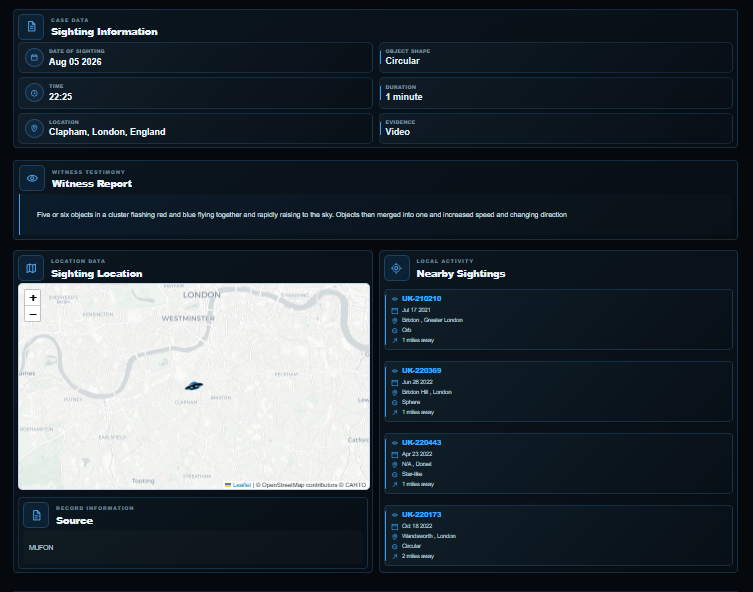
On the very last day of 2025, December 25th, another joint initiative was launched by EuroUFO.net and UAP Check: Euro Ufo Index, the catalog of reports and news of alleged UFO sightings in European countries. For the first time ever, 23 national UFO organizations from all over Europe (as well as two international ones) agreed to share their data sets in order to create a common reference tool. The first experimental version has been limited to sighting reports from the year 2024, and the essential data for indexing each case (date, time, location, type, originating organization). After the test phase is completed, the Euro Ufo Index will be extended to a longer time frame (from 1947 or earlier) and more data will be added for each report. Meanwhile, more than 4,000 reports from 43 different nations have already been indexed for that single year and the total is expected to reach 5,000, after the addition of a few more national collections.
A notable year as of the European Union UAP scene, indeed.
– – –
This article is published simultaneously in 12 different languages and relaunched on the websites of 16 national or international organizations.
The Italian Center for UFO Studies is pleased to present the first example of geo-localization of the entire case history collection in an Italian region.
Puglia has reached the finish line, putting online the entire regional catalog of sightings that Lello Cassano has built over nearly forty years of continuous effort, already published in book form in 2022: (UFO sulla Puglia).
There are nearly 1,000 cases in Puglia, for each of those it is now possible to trace the location and, from there, read the sighting report, find the date and place, discover documentary sources, any hypotheses for identification, and in some cases view the drawing or photo of the phenomenon.
The geolocalization of UFO sightings was previously offered only by a few international organizations (e.g., Enigma Labs, soon MUFON) as an incentive for witnesses to learn about other reports from the same location, including past reports.
The new service is accessible from a specific page on the CISU website.
In 2025, CENAP (Central Research Network for Extraordinary Celestial Phenomena) recorded a new high: the 1,348 reports received brought the total number of reported UFO sightings to 13,000 since the center was established. UFO sightings have increased since CENAP was established, but these record numbers are continuing a trend that began in 2019 and is largely due to increased space activity over Europe. The following figure shows the number of sighting reports received since 2018.
The map below shows the distribution of reported sightings across Germany. There has been an equal increase in sighting reports in all regions.
Starlink and space debris dominate the statistics.
SpaceX’s Starlink satellites are the main cause of the rising number of reports, with the distinctive Starlink train at the launch of a satellite batch continuing to cause confusion. However, other space-related phenomena also cause confusion. Re-entries of space debris, rocket stage ignitions in orbit, and burning debris are often reported as unexplained objects. A spectacular example occurred on March 24, 2025, when a rocket stage ignited over Germany and frozen fuel crystals glowed in the sunlight. This prompted numerous photos and videos to be taken. The following image shows one such phenomenon.
The Role of Smartphone Documentation
Technological development has been remarkable. In 2025, we received 1,506 photos and 673 videos of reported sightings. While smartphones have become the most important documentation tool, they also have their limitations. Blurred zoom when photographing stars and planets, flying insects, birds, airplanes, helicopters, and especially drones characterize the image material.
Drones as a Growing Source of Misidentification
For the past five years, there has been a continuous increase in drone sightings, too. Private, industrial, agricultural, and police and rescue service drones are increasingly being mistaken for UFOs. This development reflects the rapid spread of unmanned aerial systems, as shown in the figure below.
High Clearance Rate
Of the 1,348 reports in 2025, only ten cases remained unsolved due to insufficient data. Two reports turned out to be deliberate hoaxes. As in previous years, no cases pointing to an exotic or extraterrestrial nature were recorded. In fact, supposed characteristics of anomalous objects can be found in identified sightings due to the perception and interpretation by witnesses. A notable example occurred in August 2025 when a Cessna 172 pilot passed a supposed “Mossul object” at a distance of only 15 meters over Bavaria (see figure below). This incident is commonly referred to as a “near miss.” The explanation was a silver-colored lens foil balloon at an altitude of 3,000 feet. Even experienced observers cannot classify everyday objects immediately.
Conclusion: The Scientific Method Proves Its Efficacy
The 2025 review confirms that systematic research, technical analysis, and critical evaluation clarify almost all UFO reports. Supposedly inexplicable phenomena consistently turn out to be terrestrial objects or known atmospheric or space-related phenomena.
Hansjürgen Köhler founded CENAP (Central Research Network of Extraordinary Sky Phenomena) in Mannheim (Germany) in 1973, has long been a co-editor of its journal “CENAP-Report” and is coordinating the German UFO Hotline, collecting more than 10,000 witness reports up to now.
A new joint initiative was launched by EuroUFO.net and UAP Check: Euro Ufo Index, the catalog of reports and news of alleged UFO sightings in European countries.
For the first time ever, 20 national UFO organizations from all over Europe (as well as two international ones) agreed to share their data sets in order to create a common reference tool.
The first experimental version is limited to sighting reports from the year 2024, and the essential data for indexing each case (date, time, location, type, originating organization).
After the test phase is completed, the Euro Ufo Index will be extended to a longer time frame (from 1947 or earlier) and more data will be added for each report.
Meanwhile, more than 3,000 reports from 43 different nations have already been indexed, and the total is expected to reach 5,000 in the next few weeks, after the addition of three more national collections.
The search engine can be accessed on the Euro Ufo Index page on EuroUFO.net web site.
[This is the original version of the article, published on December 24th, 2025. An updated version was published on January 27th, 2026 on UAP Check web site]
The annual survey of European UFO sighting reports had a significant improvement in 2024: five additional national organizations joined the initiative and two international collections contributed to reaching a total of 29 European countries monitored.
Scope, Sources, and Objectives of the 2025 Update
This updated report represents a significant step forward compared to the previous edition published in June 2024 [1]. While last year’s work focused on raw reporting data from eleven European countries, the present update considerably expands both the geographical coverage and the institutional basis of the dataset. For the first time, this annual overview can rely not only on long-standing national civilian organisations and official bodies, but also on newly established or revitalised networks and an unprecedented level of international data sharing. Two major developments have shaped this year’s update.
The first is the integration of five additional European countries for which reliable national-level inputs could be obtained through the creation, reactivation, or continuation of local organisations. In the Czech Republic, the former Projekt Záře has been successfully revitalised under the new name Tým Záře, restoring national data-collection efforts that had stalled after 2020. In Greece, the establishment of GRUFON (Greek UFO Network) in September 2025 marks the first attempt in decades to structure a sustained national framework for UAP reporting and analysis. Spain has also made important progress with the inclusion of Project CUCO (created in 2002), which finally extends systematic data collection beyond the long-standing but geographically limited activity of the CEI (Centre d’Estudis Interplanetaris), focused on Catalonia. In Portugal, the creation of CTEC Stellar in 2023 has reintroduced a national structure for the systematic collection of UAP reports, filling a long-standing gap in the Iberian peninsula. Finally, despite extraordinary circumstances, Ukraine has managed to contribute updated, though necessarily partial, data through SRCAA Zond, an organisation operating under the Aerospace Society of Ukraine. ZOND continues a scientific tradition initiated in the early 1980s under the National Academy of Sciences and has pursued the investigation of anomalous phenomena continuously since 2004, including throughout the ongoing war.
The second major development is methodological and arguably even more consequential. For the first time, the world’s largest civilian UFO organisation, MUFON has agreed to share its European data with EuroUfo.Net. This cooperation makes it possible to incorporate reports from European countries where no national civilian or official UAP organisation currently exists, thereby addressing one of the most persistent structural weaknesses of continental-level analyses. Founded in 1969, MUFON is the oldest and largest civilian UFO investigation and research network in the world.
Thanks to this cooperation, data from 21 additional European countries, previously missing from continental overviews, can now be included in a dedicated section of this report (see Part 3). For the 2019–2024 reference period, these MUFON-sourced inputs alone represent a total of 3,353 reported events across 29 countries, significantly broadening the empirical base of the EuroUFO Barometer.
As a result, this year’s update goes well beyond a simple annual refresh. It now combines the original core group of European countries with long-standing national UAP organisations, newly integrated countries with direct organisational contacts, and a large additional set of countries represented through MUFON’s standardised reporting system. Taken together, these sources allow for the most extensive and inclusive overview of European UAP reporting activity assembled to date.
To account for this diversity of data sources, the analytical framework of the report is deliberately differentiated. Graphical analyses and longitudinal comparisons are limited to countries with resident organisations and continuous national data collection, while MUFON-sourced data are presented separately in tabular form only. On this basis, the report is organised into two main sections. The first examines the evolution and characteristics of UAP reporting in countries with established national organisations. The second presents UAP reports submitted to MUFON’s Case Management System from European countries without national collection structures, as a descriptive overview highlighting baseline reporting activity and future potential.
As in previous editions, it is important to emphasise that the figures presented in this report primarily reflect reported observations, rather than confirmed anomalous phenomena. It is well known among researchers and investigators across Europe that the vast majority of these testimonies ultimately correspond to misidentifications of natural or human-made phenomena, including satellites (notably Starlink constellations), the International Space Station, drones, aircraft, atmospheric effects, and common celestial objects such as stars and planets. While such cases dominate national datasets, their systematic collection remains valuable for understanding reporting dynamics, public perception, and the recurring sources of confusion that shape UAP statistics.
Only a very small fraction of cases remain unresolved after investigation, and even these rarely display strong evidential consistency. For example, within the French GEIPAN framework, the most recent case classified as an “unidentified phenomenon” of moderate consistency dates back to 2020, with the previous comparable case recorded in 2018. A dedicated, cross-national analysis focusing specifically on the small subset of unresolved cases over the past five to ten years would therefore constitute a particularly relevant avenue for future research, but lies beyond the scope of the present report.
At the same time, important structural limitations persist. Despite gradual improvements in data sharing and consolidation, Europe still lacks a harmonised institutional framework for UAP data collection and analysis. In many countries, national datasets depend heavily on the sustained efforts of a very small number of volunteers, rendering reporting systems vulnerable to temporary interruptions or discontinuities. This fragility is illustrated by the absence of consolidated national data for the United Kingdom in 2024, as well as by partial gaps in the Italian dataset for also 2024.
In this context, EuroUfo.Net plays a useful coordinating role by providing a stable platform for collaboration, information exchange, and methodological discussion among national organisations and independent researchers across Europe. Although EuroUfo.Net does not constitute a formal institutional body, it facilitates continuity by maintaining long-term points of contact, encouraging data sharing, and promoting comparative approaches to national statistics. This informal but persistent network contributes to greater coherence in European-level analyses and helps mitigate, to some extent, the structural fragmentation that characterises UAP data collection at the continental scale.
Nevertheless, the progress achieved since the previous report demonstrates that incremental, cooperative efforts, particularly across borders, can substantially improve the quality and scope of European UAP monitoring. The continued development of collaborative frameworks, both formal and informal, remains essential for advancing a more consistent and transparent understanding of reported UAP activity in Europe.
1. Annual Volume of Reported UAP Events in Europe (2019–2024)
Before examining country-level distributions, it is useful to consider the overall evolution of reported UAP events in Europe over the 2019–2024 period. Over the six-year reference period, a total of 32,253 UAP-related events were reported across the European countries covered in this update. Annual totals fluctuate within a relatively narrow range, from a minimum of 4,833 reports in 2021 to a peak of 6,679 in 2020, with an overall average of approximately 5,375 reports per year. This general stability suggests that, at a continental scale, UAP reporting in Europe has remained broadly consistent over time, notwithstanding short-term variations linked to specific national contexts or external factors.
Table 1. Annual dataset values from 2019 to 2024
Note: 2024 data are incomplete for Italy and the UK, so total is underestimated.
Regarding the noticeable peak between 2019 and 2020, it has been previously noticed that the sharp increase could be attributed to three countries: Belgium, Germany and the Netherlands. One strong hypothesis behind this increase is that that year was the beginning of the operational launches for the Starlink satellites by SpaceX. Confusion between these satellites and UAPs is common because newly launched satellites appear as eerie, bright, straight lines or “trains” of lights in the night sky, resembling unusual aerial phenomena, even for pilots, leading to numerous reports of UAP before they spread out into their operational orbits and become harder to see. These “satellite trains” are simply batches of 50-60 satellites released together, reflecting sunlight, and are easily visible during twilight hours, mistakenly identified as potential UAP.
In early 2020, another contextual consideration that was discussed by some researchers was the potential influence of COVID-19–related behavioural changes (such as changes in outdoor activity and sky-watching patterns during lockdowns) on the volume of UAP reports. However, empirical investigation into this hypothesis has not supported a causal link: for example, a study published in the Journal of Scientific Exploration found no evidence that pandemic-related behavioural shifts significantly affected UAP reporting rates in the United States[2]. While this context is interesting from a historical perspective, it should not be interpreted as a substantive explanatory factor for the 2020 peak in European data.
Of this six-year total, 28,900 reports (approximately 90%) originate from national civilian or official UAP organisations forming the primary analytical dataset, while 3,353 reports (around 10%) derive from the MUFON Case Management System (CMS). Although numerically smaller, the MUFON contribution plays a disproportionate role in extending geographical coverage. Thanks to this cooperation, reports from 21 additional European countries, previously missing from previous EuroUfo.Net continental overviews, are now included in this Barometer. As a result, the 2025 update incorporates data from 37 European countries in total, substantially expanding both the demographic and territorial scope of the analysis (see Figure 1).
Figure 1. Basic Political map of Europe (for geographic orientation)
The comparatively lower total observed for 2024 should therefore be interpreted with caution. As discussed earlier, consolidated annual data are still missing for three organisations that normally contribute substantial volumes, most notably in the United Kingdom and Italy. Based on recent historical levels, the inclusion of these missing inputs would likely add several hundred additional reports, on the order of 700 to 800 cases, bringing the 2024 total close to that observed in 2023. The apparent decline in 2024 thus reflects limitations in data availability rather than a meaningful reduction in reporting activity.
Beyond absolute numbers, the present dataset represents a major step forward compared with earlier European overviews. Whereas previous Barometers were typically limited to fewer than a dozen countries, the current compilation spans a large proportion of Europe’s population and geographical area, covering Western, Northern, Southern, Central, and parts of Eastern Europe. It should nevertheless be noted that MUFON-derived data likely represent only a fraction of the actual reporting activity in these additional countries, as they capture reports primarily from individuals who are aware of the US-based organisation and motivated to submit their observations through a foreign reporting platform rather than through local or national structures.
Even with this caveat, the expanded coverage substantially reinforces the value of the EuroUFO Barometer as an indicator of continental-scale reporting dynamics, while simultaneously underscoring the importance of continued institutional cooperation to improve completeness and representativeness in future editions.
Taken together, the 37 European countries included in this edition of the Barometer represent a clear majority of Europe’s population and geographical area. They encompass all major population centres in Western Europe, the Nordic countries, Southern Europe, and much of Central and Eastern Europe, while also including geographically extensive states such as Norway, Sweden and Russia. Although precise population-weighted comparisons remain approximate due to varying definitions of “Europe,” the countries covered in this report plausibly account for well over two thirds of Europe’s inhabitants and a comparable share of its landmass.
Nevertheless, important gaps persist. Several European countries still lack any identifiable national civilian or official structure for the systematic collection of UAP reports and are therefore absent from the primary analytical dataset. Notably, this includes Austria, Poland and Switzerland, three geographically and demographically significant European states whose absence highlights the uneven development of UAP reporting infrastructures across the continent. The lack of data from these countries should not be interpreted as an absence of UAP observations, but rather as an indication of ongoing structural and institutional limitations in European-level monitoring.
2. Primary Analytical Dataset: Countries with Established National UAP Organisations
The tables and charts in this section summarize the raw data on UFO/IFO observations reported to 23 organisations across 16 European countries, for which consolidated national statistics are available. Data for the UK in 2024 are currently missing but are expected to be released next year, and information from one major Italian association is also not yet available. These countries share a key structural feature: the presence of resident civilian UAP associations or official bodies that have maintained continuous, long-term data collection and stable points of contact with EuroUfo.Net over several years (Table 2).
In these countries, UAP reports are collected within a well-defined national context, using established reporting channels and investigation procedures, and are supported by local archival practices and institutional memory. This continuity allows for the examination of interannual variations, longer-term trends, and cross-country comparisons with a reasonable degree of methodological consistency. For these reasons, only this subset of countries is included in the graphical analyses and trend-based interpretations presented below.
The data presented here have been compiled through the voluntary contributions of member organisations within the EuroUfo.Net virtual community, supplemented by publicly available statistics published by national institutions of GEIPAN in France and the Aeronautica Militare in Italy. Although differences in reporting practices and public visibility persist between countries, this primary analytical dataset represents the most robust and internally coherent foundation currently available for assessing the evolution of reported UAP activity across Europe.
Table 2. National organisations contributing data to the primary analytical dataset, with year of establishment and online reporting resources.
As in previous editions, it must be emphasised that these figures reflect reported observations rather than confirmed anomalous events. The vast majority of cases ultimately correspond to misidentifications of natural or human-made phenomena. Nevertheless, the systematic collection and comparison of such reports remain essential for understanding reporting dynamics, identifying recurrent patterns, and isolating the small subset of cases that may warrant deeper investigation.
With respect to the most difficult-to-explain cases, a separate analysis focusing specifically on currently unexplained events reported over the past five to ten years would be particularly valuable. At present, such an analysis is only realistically feasible for France, where the GEIPAN makes detailed case classifications publicly available. Based on these published data, the most recent cases classified in the unexplained categories (D/D1/D2) date from 2022 (three cases), with earlier occurrences recorded in 2020 (two cases) and 2019 (one case).
Preliminary data for 2024 seems to indicate a slight decline in the total number of reported UAP observations across the 16 countries included in this analysis, with 4,695 reports compared to 5,069 in 2023. This apparent decrease should be interpreted cautiously, as contributions from two UK organizations and one Italian organization are still missing. Given the historically high reporting levels in these countries, the actual number of observations for 2024 is likely to be in fact higher.
Compared to last year, the dataset has also expanded in geographic scope. While the 2023 report included 11 countries (Belgium, Denmark, Finland, France, Germany, Italy, Norway, Portugal, Romania, Sweden, the United Kingdom, and the Netherlands), the 2024 dataset encompasses 16 countries (Belgium, Czech Republic, Denmark, Finland, France, Germany, Greece, Italy, Norway, Portugal, Romania, Spain, Sweden, the United Kingdom, Ukraine, and the Netherlands). This larger set of 16 countries continues to represent a substantial majority of Europe’s inhabitants. The added countries: Czech Republic, Greece, Spain, and Ukraine, contribute notable population shares in their regions, further broadening the geographical and demographic scope of the EuroUFO Barometer. From a numerical standpoint, the 16-country dataset now includes over 31,503 reported cases from 2019 to 2024, compared with approximately 23,800 cases from 2019 to 2023, reflecting both the inclusion of additional countries and the accumulation of new annual reports.
Table 3. Country-level totals of reported events per year
Among countries with complete data, reporting levels in 2024 vary considerably. Germany continues to show elevated activity, with reports increasing from 1,148 in 2023 to 1,436 in 2024, reflecting well-established reporting lines and clear institutional associations, while Belgium and France recorded decreases, reaching 222 and 175 reports, respectively. Denmark and Finland saw modest increases, with 121 and 99 reports, while smaller reporting countries, including Greece, Norway, Portugal, Romania, Spain, Sweden, Ukraine, and the Netherlands, remained largely stable.
As in previous years, it is important to consider contextual factors that may influence reporting levels. For example, the Netherlands reports observations exclusively via the website of the only currently active organisation in the country. The Netherlands also has one of the highest population densities in Western Europe, with over 500 people per square kilometer. By comparison, Belgium has 380, the United Kingdom 280, Germany 240, Italy 200, and France 120 people per square kilometer. These factors, population density and the organization of reporting channels, certainly contribute to the observed differences in the number of reports between countries.
Overall, the preliminary 2024 data highlight the continuity of high reporting activity in some countries, such as Germany, and moderate declines in others, including Belgium and France. Smaller reporting countries remain largely stable. The expansion of the dataset to include 16 countries, together with the cumulative total exceeding 31,500 reports, underscores both the persistence of organised reporting efforts and the value of a broader European perspective in understanding trends in reported UAP activity.
Table 4.Participating countries and reporting organisations included in the dataset
Interannual Variations and General Pattern
To limit the risk of over-interpretation, the analysis of interannual variations in this report focuses primarily on year-to-year changes between 2023 and 2024. Longer-term evolutions are discussed qualitatively, as differences in reporting structures, public awareness, and investigation practices constrain the interpretability of percentage-based comparisons over extended periods.
At the European level, the preliminary 2024 data suggest a modest decline in the total number of reported observations compared to 2023. This decrease must be interpreted cautiously, however, as the 2024 dataset remains incomplete. Consequently, comparisons involving these countries are not directly comparable to previous years.
Among countries with complete data, several patterns can nevertheless be identified. Germany continues to display consistently high reporting levels and shows a further increase in 2024, reinforcing a long-term pattern of sustained reporting activity. By contrast, a number of countries that experienced elevated reporting around 2020, such as Belgium, France, Sweden, and the Netherlands, show more moderate levels in recent years, suggesting a stabilisation following earlier peaks. Other countries, including Denmark, Finland, and Romania, exhibit gradual increases from relatively low baselines, likely reflecting improved reporting visibility or organisational continuity rather than abrupt changes in observed phenomena.
Overall, these patterns point to the predominance of structural and contextual factors, such as population density, reporting channels, and organisational capacity, in shaping national reporting levels. While short-term variations provide useful indicators of reporting dynamics, the data do not support simple interpretations in terms of changes in underlying UAP activity. It is also noteworthy that, at the European level, no sudden or general peak in reporting has been observed since the Belgium UFO wave of 1989-1990, highlighting the relative stability of reporting patterns in the decades since.
Table 5.Country-level totals of reported events and interannual variation (2023–2024)
Notes: 1. Incomplete data: 2023 and/or 2024 data are incomplete; corresponding percentage variations are therefore not shown. 2. Low-count countries: Percentage variations based on very small absolute numbers should be interpreted with caution and are not shown. 3, MUFON data availability: MUFON Spanish data are included for 2024 only; percentage variations are therefore not shown.
3. Complementary Dataset: UAP Reports Submitted to the MUFON Case Management System (CMS)
In addition to extending coverage to countries without resident national UAP organisations, MUFON CMS data have also been integrated, where available, into the datasets of eight countries that already possess established national reporting structures (see Table 5). In these cases, MUFON inputs serve as a supplementary source and are included alongside national statistics, without replacing them.
Beyond these integrations, MUFON CMS data provide a standalone complementary dataset covering 21 additional European countries not represented in the primary analytical sample. For the 2019–2024 reference period, these MUFON-only inputs amount to a total of 750 reported events, offering a broader, though necessarily more heterogeneous, geographic perspective on UAP reporting activity across Europe.
Table 6.MUFON CMS–sourced UAP reports in European countries without resident national reporting organisations (2019–2024)
This section presents a complementary set of UAP reports submitted to the MUFON Case Management System (CMS) from European countries where no long-standing national UAP organisation currently exists, or where no consolidated national statistics are publicly available. Unlike the primary analytical dataset examined in the previous section, these data originate from a centralized international reporting framework rather than from resident national structures embedded in local social, cultural, and institutional contexts.
All reports included in this dataset follow MUFON’s standardized intake and investigation procedure. Witnesses submit detailed reports through the MUFON CMS, after which each case is assigned to a trained field investigator who is required to establish contact with the witness within 72 hours. Additional information is collected, and the case is reviewed, classified, and closed, typically within a 60-day timeframe. This uniform process ensures a high level of procedural consistency across countries, even in the absence of local organisations.
However, important structural differences distinguish this dataset from the primary one. Reporting volumes in MUFON-only countries are influenced by factors such as public awareness of MUFON, language accessibility, internet usage, and media exposure, rather than by sustained national outreach or locally anchored investigative activity. Annual case numbers are generally low and discontinuous, making longitudinal trend analysis or graphical interpretation statistically fragile and potentially misleading.
For these reasons, the MUFON-sourced data presented here are limited to tabular form and are provided strictly for descriptive purposes. They are not included in the charts or comparative analyses applied to countries with resident organisations. Their primary value lies in extending the geographic coverage of the EuroUFO Barometer, offering baseline indicators of reporting activity, and highlighting regions where the development of local data-collection structures could significantly enhance future monitoring efforts.
Despite their descriptive nature, several broad observations can be drawn from the MUFON-sourced dataset. First, reporting volumes remain very low in most countries, often limited to single-digit annual figures, underscoring the absence of sustained national reporting infrastructures. Within this context, Russia stands out with consistently higher numbers across the reference period, a pattern that can largely be attributed to the presence of an established civilian reporting channel, complemented by a smaller number of submissions via the MUFON Case Management System. This concentration effect, rather than any inference regarding underlying phenomena, accounts for the higher aggregate figures observed for this country.
The table 6 also highlights notable structural gaps in central and eastern Europe. Countries such as Austria and Switzerland, located at the geographic core of Europe and characterised by high levels of technological development and public connectivity, continue to rely exclusively on external reporting mechanisms. Similarly, Poland, one of Europe’s largest countries by population and territory, shows recurrent but discontinuous reporting activity, reinforcing the need for locally anchored organisations capable of providing continuity, outreach, and national-level aggregation. In this respect, the MUFON dataset serves not only as a complementary statistical input, but also as an indicator of regions where the establishment of resident data-collection structures could substantially enhance future European-wide monitoring efforts.
4. Conclusion
The 2025 update of the EuroUFO Barometer represents a clear step forward in both the breadth and depth of continental UAP reporting. Compared to previous editions, the dataset now integrates a larger number of countries, including newly established or revitalised national organisations, as well as a complementary set of reports sourced from MUFON’s Case Management System covering nations without resident UAP structures. Taken together, these developments provide the most comprehensive overview of European UAP reporting activity compiled to date, spanning 37 countries and over 32,000 recorded events from 2019 to 2024.
While these figures mark an important advance, it is crucial to interpret them with caution. Reporting levels remain strongly influenced by structural and contextual factors such as the presence of national organisations, population density, public awareness, language barriers, and local reporting channels. Some national datasets are incomplete, and a small number of duplicate or backdated reports may exist. Moreover, the vast majority of cases correspond to misidentifications of natural or human-made phenomena, with only a very small fraction remaining unresolved after investigation. As such, inter-country or interannual comparisons should be treated as indicative rather than definitive.
Despite these limitations, the update underscores the value of incremental, cooperative efforts, both formal and informal, in enhancing the quality, resilience, and scope of UAP monitoring across Europe. Networks such as EuroUfo.Net and UAP Checkplay a vital role in fostering continuity, methodological exchange, and collaboration, helping to overcome the fragmentation and gaps that have historically limited continental analyses. The report also highlights regions, including central and eastern Europe, where locally anchored data-collection structures remain absent, pointing to opportunities for further institutional development.
Overall, the 2025 update demonstrates that a broader, more inclusive EuroUFO Barometer is both feasible and already taking shape. Continued cooperation, transparency, and sustained effort by national researchers and volunteer organisations will be essential to consolidate this progress, improve data completeness, and deepen our understanding of the long-term dynamics of reported UAP activity in Europe.
In this perspective, it is worth noting a recent initiative emerging within EuroUfo.Net that directly complements the annual statistical work presented in this report. Following discussions among European researchers at the SOL Symposium in Baveno in 2025, EuroUfo.Net and UAP Check launched a joint pilot project aimed at creating a public “Euro UFO Index”. The objective of this initiative is not to provide an additional analytical dataset, but rather a simple, transparent catalogue listing basic data or reported UFO/UAP observations, such as date, location, and broad sighting type, while linking each entry to the original source organisation for further details.
As a first, deliberately limited experiment, participating organisations have been invited to contribute a small subset of records for the year 2024 only, thereby minimising the workload and allowing a practical assessment of feasibility and willingness to cooperate. At the time of writing, a beta version of the Euro Ufo Index is already online[3] and includes approximately 1,500 reports contributed by several national partners, out of an expected total of around 4,700 entries for the pilot phase.
Although the Euro Ufo Index is not intended as a research tool, it offers a clear continental overview of when and where UFO/UAP reports are being submitted in Europe, and it provides a concrete foundation for future cooperation. Together with the annual statistical barometer, this initiative illustrates how modest, cooperative steps can gradually strengthen European-level visibility, continuity, and transparency in the documentation of UAP reporting activity.
[This is the original version of the article, published on December 24th, 2025. An updated version was published on January 26th, 2026 on UAP Check web site]
ACKNOWLEDGMENTS The author sincerely thanks all national coordinators and researchers who, on a yearly basis, make their data freely available for this study and whose sustained dedication and voluntary efforts form the foundation of European-level UAP research. Their long-term commitment to data collection, investigation, and transparency is essential to the continuity and credibility of this work. Special thanks are extended to Edoardo Russo (CISU), founding member of EuroUfo.Net and UAP Check board member, for his valuable assistance and continued support in the preparation of this annual report. The author also gratefully acknowledges Robert Spearing, MUFON Director of International Investigations, for authorising the use of MUFON Case Management System (CMS) data, thereby significantly expanding the geographic scope of this research. The author further wishes to thank Giorgio Abraini for reviewing the manuscript and offering constructive comments and suggestions that helped improve the clarity and overall quality of the report.
As a result of an unprecedented international cooperation, this article is also published on the participating organizations’ websites in their own different languages.
[2] Cockrell, R. C., Murphy, L., & Rodeghier, M. (2023). Social Factors and UFO Reports: Was the SARS-CoV-2 Pandemic Associated with an Increase in UFO Reporting? Journal of Scientific Exploration, 36(4), 641–656. https://doi.org/10.31275/20222681
Philippe Ailleris is a Senior Project Controller at the Space Research and Technology Centre of the European Space Agency (ESA) in the Netherlands. He works in the Earth Observation Projects Department, specifically for the Sentinel-1 and CO2M satellite missions of the EU Copernicus Programme. A French citizen, Ailleris has been interested in the UAP topic since the creation of the French UAP research and information group (CNES/GEIPAN) in 1977. His research focuses on the scientific examination of UAP observations and the creation of a systematic and rigorous science of the UAP phenomena. In 2009, he founded the UAP Observations Reporting Scheme Project. Since 2015, he has been actively involved in the UFODATA project, developing a large international network of automated surveillance stations to monitor the skies for UAP. His latest research focuses on using Earth Observation civilian satellites to detect anomalous aerial events.
1.1 – EUROPE AS A PLURALITY OF COUNTRIES, LANGUAGES, EXPERIENCES
Europe is made of at more than 40 different nations, speaking at least 36 different languages.
As a first consequence, such a wide fragmentation has always been a difficulty for communication (the so-called language barrier). As a second consequence, separate cultures mean a great richness of different experiences, ideas and initiatives.
Both consequences have had a role in the development of ufology in the Old Continent, not to tell about different political systems (including liberal democracies, Communist regimes and right-wing dictatorships). We’d better talk of European “ufologies” in a plural way, indeed, since difference has always been the rule, as of government involvement as well as of mass media attitudes, as of available UFO literature as well as of UFO researchers communities. In a way, each country has had its own history, activities and features, even if ufologists have long had a tendency to comunicate with their fellows in nearby or faraway countries. The United States of America have been the point of reference, for obvious reasons. But British and French ufology have also had a strong influence on other European countries.
Even if less known outside each one’s boundaries, smaller nations’ ufologies have long been producing interesting results, which have often been overlooked, alas, until exchanges have become better, the more so after the Internet became widespread.
– A EUROPEAN NETWORK: EUROUFO.NET
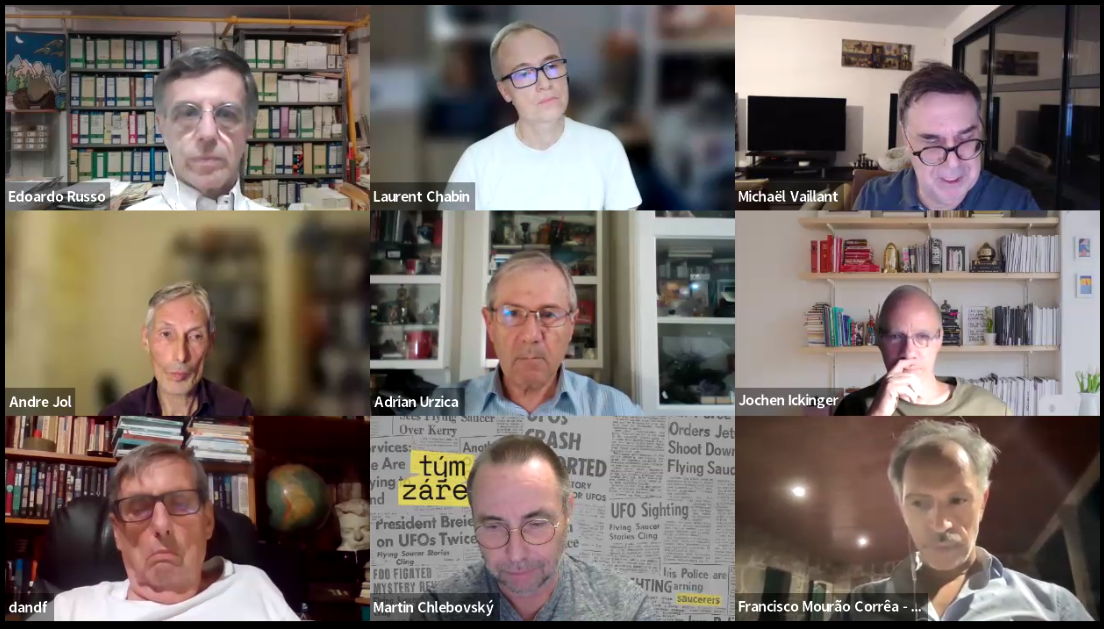
After some previous failed attempts, a successful initiative to create a circular communication among European researchers was started in 1998, following the launch of a short-lived “European Journal of UFO and Abduction Studies” : six long-standing national organizations [from Belgium, Denmark, France, Italy, Spain, Sweden] agreed to create an informal network connecting not groups but individuals. To be precise, it was meant for researchers doing a specific project or activity of any kind, so to keep one another informed and get a better cooperation. After more than 25 years EuroUfo.net is still working as a community of scientifically oriented fellows, with a mailing list, a web site, some meetings during international congresses (eg. in Chalons 2005, Saint Vincent 2007, Paris 2014, Toulouse 2022, Bruxelles 2024), regular video meetings, intense exchanges of documentation and information. People have come and gone of course. The informal network is presently including about 100 members from 23 countries. Quite a few of them are or have been MUFON representatives or members, of course. EufoUfo.net is and has long been the main connection tool in the Old Continent, and its members are actively participating in the international UAP Check iniziative for a worldwide network.
– SOME EXPERIENCES IN EUROPEAN UFOLOGY
It’s obviously impossibile to offer a comprehensive overview of what European ufologists have been producing, bei t similar or different from their American counterparts. My cursory presentation will offer a glance of just a few selected initiatives, which gave a new perspective to UFO (now UAP) studies in five different areas: – Data collection and analysis; – Instrumented research; – Analysing the data; – Archives; - Disclosures; – Artificial Intelligence.
2.1- INVESTIGATION OF TESTIMONIES
2.1.1 COGNITIVE INTERVIEW FOR UAP INVESTIGATION
An investigation tool coming from France is the UFO adaptation of the Cognitive Interview. It is a methodology of collecting information from eye-witnesses, that was developed from police investigation needs in the mid-‘80s. Its aim is double: to optimize retrieval of details from memory, while minimizing misinterpretations or confabulatios.
Apart from the theoretical background, which is well established in psychological literature, some specific “rules” have been developed. MUFON Field Investigators may be pleased to compare those rules with our Investigators’ Manual indications since the late ‘70s: – reconstructing the environment situation, preferably on the spot; – an introduction explaining the reasons and the importance of the interview to the witnesses; – in-depth reporting, divided in two parts, the first being a free account by the witnesses; then follow the open-ended questions by the interviewer. The enhanced cognitive interview also includes some specific techniques: – describing the events in several different orders and from different perspectives, in order to help recovering more details; – helping the witness to re-live the state of mind at the time of the event; tailoring the language upon the witness’ own one; leaving some pauses between questions; using tricks to reduce distractions and to remain in a state of focused concentration.
Though time-consuming (2 hours would be the best), the cognitive interview has been shown to collect much more information from the witness (30%-40%) than any other interviewing technique.
Jacques Py (a professor of psychology at Toulouse University) has long been teaching courses in cognitive interview to Gendarmerie (a French police). This techniqe was also adapted for collecting witness testimonies about ball lightning reports from the BL study group at the Laboratoire de Foudre (Lightning Laboratory) headed by Raymond Piccoli. And a special course for UFO field investigators has long been created and taught by him and his university associates to GEIPAN investigators, that is the network of volunteers doing the field investigation preliminary work for the UAP study group within the French NASA (Centre National d’Etudes Spatiales). An Online Cognitive Interview was also designed for UFO reports, specifically to elicit a comprehensive initial account which prevents loss of information from any delayed interview, as well as helping investigators to establish priorities in resource allocation. Some analyses of the impressive results have been shown during specific workshops about data collection and evaluation, which the Groupement d’Etudes et Information sur les Phénomènes Aérospatiales Non-identifiés organized in Paris (2014) and in Toulouse (2022).
2.1.2 – WHAT ABOUT EYEWITNESS RELIABILITY?
Vicente-Juan Ballester Olmos is a veteran Spanish ufologist, active since 1968. He has been a Spanish representative of MUFON and a speaker at MUFON Symposiums in 1993 and 1997. He recently coordinated an international collection of essays about as complex an issue as eyewitness reliability, which has been the subject of a rich literature in forensic as well as in psychology studies at large. The challenge here was to put a reference opus together about the UFO eyewitness testimony. As many as 60 researchers from 14 different countries (and from different perspectives or experiences) collaborated with 57 chapters to a monmouth volume, amounting to 711 pages in large format, which was published in 2023 and was co-edited by American ufologist Richard Heiden. Specialists in social, physical, and biological sciences, including psychology as well as psychiatry, sociology, anthropology, history, philosophy, folklore, religion, journalism, engineering, computing, medicine, education, analysts with experience in the study of UFO perceivers, and other professionals offered a cross-disciplinary overview on Case Studies, Psychological Perspectives, Witness Testimony, Empirical Research, Anthropological Approaches, Metrics and Scaling, and Epistemological Issues, going from
clinical assessment to psychometrics, from comparative inquiry to statistical analysis.
It will remain as a milestone in applied scientific study to our subject.
2.1.3 – TRYING TO REDUCE SUBJECTIVE DATA
Laurent Chabin is a French engineer, has long been a volunteer field investigator with the UFO study group of the French National Space Center, and is presently working with SCEAU (the French Association for Saving and Preserving UFO Studies and Archives).
He was inspired by a field equipment that GEIPAN created in 1978, called SIMOVNI (UFO Simulator), which helped witnesses to point the exact direction and elevation they saw a UFO, and placing a simulation of it (as of size, shape and brightness) in the exact position through the visor. New technologies enabled Laurent to use Augmented Reality for more modern an equivalent device, which he presented at CAIPAN (the Workshop on Data and Analysis Collection about UAP, organized by GEIPAN in Toulouse, in 2022). Interested fellow researchers were able to test the device on place. The main problem with it is the price: 3,500 dollars, which is still expensive for private individual investigators and is acceptable only for a government organization like GEIPAN. But as software and hardware standardization and the user base progress, implementation complexity will decrease and costs will become reasonable. This may be a practical solution to reduce some subjective estimation errors and obtain more objective and reliable data on observation reports. This is also a powerful tool for cognitive psychology studies; for instance, studying the correlation between the angular height and the angular size over-estimation, becomes simple.
2.2 – INSTRUMENTED RESEARCH
Reducing or eliminating subjective testimonies and the witness role itself: that’s long been the goal of “instrumental ufology”, that is using automatic recording of visual or physical data (eg. radar, magnetic fields, electromagnetics, sound) which can offer science something objective to work on. Several old or current examples are know.
2.2.1 – FROM A REMOTE NORWEGIAN VALLEY…
Probably the longest enduring one is Project Hessdalen, in Norway. A series of recurrent sightings of luminous aerial phenomena in a remote valley prompted Norwegian ufologists to organize skywatch campaigns there, then a college professor, Erling Strand, made it a structured effort to get instrumented confirmation of the sightings in 1983. After more than 40 years, the project is still active. It would be impossibile to give even a quick overview of it in a few minutes. Let’s just say that the project has collected a huge lot of documentation and data about anomalies in photos, videos, EM data. Analyses have been performed and new tools or devices have been designed and installed in a permanent automatic station which is still in operation. Dozens of researchers have taken part in such life-long activity, with international cooperation from other countries. Let me remind the Italian Commitee for Project Hessdalen, which organized some field expeditions in the early 2000’s, with instrumentation and personnel from the Radioastronomy Institute of the National Research Council as well as from the University of Bologna.
A rich literature exists on this Project. Interpretations and controversies have never stopped, but it’s right that it is so.
2.2.2 – … TO THE ROOFS OF A GERMAN UNIVERSITY More recently, a German university launched a new project for instrumented research on UAP. The man here is Hakan Kayal, professor of Space Technology at Julius-Maximilians-Universität in Würzburg. In 2021 he created IFEX (the Interdisciplinary Research Center for Extraterrestrial Studies) which includes research on Unidentified Aerial Phenomena among its activity. Among the center’s activities, more than one specific automatic station for video-recording anomalous aerial phenomena were developed:
– The first SkyCAM systems for the detection of transient celestial events started as early as 2008 with the simple all-weather cameras. Over the years, several variants with low-cost components were implemented by student work to integrate self-received ADS-B data from aircraft, self-received weather satellite images from geostationary and polar-orbiting satellites, or passive RADAR.
– In 2016, ASMET camera project (Autonomous Sensor network for the detection and observation of METeors) was funded by the EU Regional Development Fund (EFRE), primarily designed for the detection of meteors but also for other short-term light phenomena. This new system uses AI neural networks to reduce the false alarm rate. – Since December 2021, SkyCAM-5 has been in continuous operation at the university’s geography building. This is an experimental test platform for the autonomous detection of Unidentified Aerial Phenomena (UAP’s). Through the use of image processing algorithms, the sky is continuously monitored for unusual phenomena. Current machine learning models are applied to reduce wrong detections. The main objective of the camera system is to detect UAP’s, though it can also detect short duration luminous phenomena such as lightning or meteors. A client/server system is designed to network additional cameras. – Since 2024, SkyCam-6 dual camera system has been in operation in Hessdalen, Norway, and is connected to the main server and UAP observation station of SkyCAM-5 in Würzburg, enabling it to automatically search for anomalies in the sky over that Norwegian valley. – Another SkyCAM is soon be installed on the Zugspitze, the highest Mountain in Germany.
Hakan Kayal’s IFEX is probably the most advanced series of projects in instrumented UAP research in Europe.
– ANALYSING THE DATA
2.3.1 – AUTOMATIC CLASSIFICATION AND FILTERING OF UFO REPORTS
Preliminary analysis of incoming UFO reports in order to identify conventional objects or phenomena is a primary activity with any UFO investigation group, as MUFON field investigators know far too well. Sometime it demands a long time and a deep experience, but the largest part of those reports are rather easily recognizable as IFOs (Identified Flying Objects) of just a few recurrent categories: stars and planets, bolides and meteors, as of natural causes; aircrafts and satellites, balloons or sky lanterns, rocket launches or reentries, as of artificial causes. An automated recognition tool was developed by French data scientist Michael Vaillant for the official UAP study group within CNES (the French NASA,) soon implemented in a newer version called UAP Check, to be offered as a free API to private UFO organizations participating in an International network.
The system relies on data collected through an electronic questionnaire and generates a profile of the phenomenon based on the information provided by the witness: date, time, exact location, direction, azimuth, elevation, duration, movements, shape, color, etc. These data are then compared to the positions of hundreds of potential explanations, whose characteristics are computed in relation to the witness’ location, using real-world data from specialized databases (in line with the previously mentioned categories: satellites, stars, aircraft, balloons, etc.). The results are given as a probability rating for each potential identification, in a totally objective way, thus helping investigators to properly classify incoming reports.
2.3.2 – HUMAN VS. ARTIFICIAL INTELLIGENCE
Parallel to the automated tool, which was introduced in 2016, GEIPAN investigators have long been doing the classification work with their own hands and heads. In the early ‘80s, GEIPAN had a larger paid staff of analysts and could afford a double-blind evaluation process, where two different experts (not the investigators) were evaluating each report and offered their hypotheses of identification: if both were agree, the case was closed; if they did disagree, a deeper collective analysis was required. This process was bringing to each case being assigned a quality judgement going from A (lowest) to D (highest), i.e. from the insufficient data through certainly identified, then probably identified, up to unidentified aerial phenomena. This classification is still in use, but times have long changed since then, the current staff is very small and most of the field investigation activity is performed by a network of volunteers, many of them ufologists, which are trained by GEIPAN experts, then go out investigating incoming reports, just like MUFON Field Investigators do. And just like MUFON F.I., GEIPAN investigators are also offering their first evaluation of each case, which is later discussed in the group, also involving external experts for the strangest (D-class) case histories.
A Belgian investigator, to be precise the Director of Field Investigators for the UFO group COBEPS (formerly known as SOBEPS, famous for investigating the great wave of Belgium sightings in 1989-1991), Jean-Marc Wattecamps, had an experiment with Machine Learning supervised classification procedure, using the high quality GEIPAN database for French reports as well as the Belgian national collection of reports. A geologist by education, a high school teacher by profession, Wattecamps tested the efficiency of an automatic GEIPAN classification (A,B,C,D), with 1) numerical parameters like angular size, duration, etc.; and 2) text mining of the testimonies or case summaries. Orange software by Lubiana University was used. The best algorithm was the so-called “Random Forest” (a collection of decision trees working together to make predictions). After some experiments, the best results were obtained for the extreme categories ‘A’ and ‘D’ (where ‘A’ are clearly identifiable cases, ‘D’ clear-cut UFOs). In such case both numerical and text approaches performed very well, with AUC >0.9 and Precision >0.85.
2.4 – ARCHIVES AND ARCHIVAL RESEARCH
2.4.1 – OPERATION ORIGINS: HOW IT ALL BEGAN
Research of news items in old newspaper collections has long been done by UFO researchers and historians for a long time, and the huge amount of such information has only been scratched. Modern instruments are making such searches easier that in the past, at least when newspaper collections are digitized and made available. Such a lucky situation is not widespread in all countries, and a lot of human work has been and is still used, especially for local editions or low circulation periodicals. The Italian example is the Operation Origins, which has involved more than 40 volunteers who checked more than 80 daily newspapers collections for the “primordial” years from 1946 through 1954. A total of 8,000 previously unknown newsclippings were recovered and reproduced, bringing to 2,000 old reports surfacing from decades of oblivion, and allowing Italian UFO historians to get much more complete a view of our own beginnings. Following a similar path to that of the American UFO historian Loren Gross, the longtime coordinator of the Italian project, Giuseppe Stilo, wrote a full collection of books reporting and organizing such documentation, one for each of the recurrent “waves of sightings” in 1946 (ghost rockets), 1947 (“flying saucers” arrival), 1950, 1952 and 1954 (two volumes because of the sheer volume of case histories and news reports in that fabulous year).
2.4.2 – BUILDING AND KEEPING THE LARGEST ARCHIVES IN THE WORLD
Anders Liljegren is a veteran Swedish researcher, full-time devoted to ufology since he retired from work in 2012. He was one of the founders of AFU in 1973. At that time, the name was different, then it became Archives for UFO Research, and in 2013 it was changed to Archives for the Unexplained, because of an enlarged focus of activity. It was started as a national lending library, but soon it became an international archive. AFU is now a foundation, with a network of volunteers and some personnel paid by the Swedish civil service. Along the decades, it had an unprecedented snowball effect (attracting more and more collections from deceased or retired researchers from all over Europe and even from the States), which took it to become the largest existing UFO archive in the world. That may sound like a big claim, but let’s consider some figures: the latest totals are1.5 kilometers (one mile) of shelves in ten different facilities (all within the town of Norrköping), totalling nearly 5,000 square feet, which are hosting more than 20,000 books, more than 50,000 magazine issues, about 500,000 newsclippings and more than 50,000 original European UFO reports.
Besides the physical (paper) collections, AFU have been painstackingly digitizing periodicals, clippings and documentation, which has been uploaded on a huge website, presently consisting of several Terabytes, openly accessibile, and another large mass of data not publicly available because of privacy or copyright reasons.
2.4.3 – HOW TO INVOLVE PUBLIC LIBRARIES AND ARCHIVES
SCEAU (Sauvegard et Conservation des Etudes et Archives Ufologiques, i.e. “Preservation and Conservation of UFO Studies and Archives”) is a French non-profit organization founded in February 1990 by a small group of longtime or formerly active ufologists, with the goal of a long-term preservation of ufological heritage as a cultural product. Its current secretary is Gilles Durand, a librarian by profession.
The French way has been quite original and different from the previously described example of an archive, because of the planned destination of recovered documentation: it’s not meaning to keep it in a private archive or organization, but to make it available to either future researchers or the general public, by depositing them in national and local archive centres as well as in public libraries.
35 years of activity have defined a regular operating path. The first step is recovering UFO groups’ or individual’s archives before they get lost, when the group disbands or the individual retires from active ufology (or has died). Dozens of such operations have been conducted all over France. Books and periodicals are the less relevant part, which is often a duplicate of other collections, while investigation reports and personal correspondence are the heart of these rescue activities. The second step is the classification and a detailed inventory of each archive contents, which is published in SCEAU bulletin. The third and final phase is recovering those files and archives in a durable deposit. France has got a long tradition of National Archives and Provincial Archives. As of now, SCEAU signed a written agreement wth three of those public archives and with four public libraries, which accepted to include the UFO collections, preserving them to posterity, ensuring their durability and consenting to consultation rules, that may depend on the original owner’s intentions. SCEAU means to be a mere intermediary between the donor and the archives centre or the library. It is bound by a code of ethics, never discarding any documentation (whatever its content), never keeping any original document, always strictly respecting the donor’s will. As of now more, than 1,000 UFO books from SCEAU are hosted at the public library in Metz, several hundreds in the Nice University library and 200 more in a museum library in Yverdon. More than 10,000 UFO periodical issues have been catalogued and stored, too, as well as more than 15,000 newsclipping in French and about 8,000 in other languages.. 13 contract were signed with national or provincial archives, for storing archival collections (preferably from local ufologists). A large digitization of UFO periodicals, newsclippings and investigation reports have been ongoing, with A.I. tools, too. A total of 3.5 Terabytes of digitized documents have been stored on a NAS (Network Access Storage) up to now.
– DISCLOSURE OF GOVERNMENT UFO FILES
2.5.1 – SPANISH AIR FORCE FILES
We already mentioned Spanish ufologist Vicente-Juan Ballester Olmos. Besides cataloguing Iberian close encounter reports since the 1970’s, he has long been collecting and analysing Spanish military case histories, i.e. testimonies by on-duty armed forces officers.
Within this specific interest area, in the late ‘80s he started a series of enquiries to the Spanish Air Force, aiming to obtain copy of military pilots UFO sighting reports. The full story of this is a bit long, and Mr. Ballester Olmos reported it at length in hisarticles and books, including the American masterpiece “UFOs and the Government” edited by Mike Swords and Robert Powell in 2012. Let’s say that as an effect of meetings and correspondence between him and the Air Force Public Affairs Office as well as the Air Staff where UFO reports were kept, in 1991 a declassification procedure was started. All Air Regions were asked to transmit their UFO files to the Air Force Headquarters. In the following months, there were hundreds of hours of meetings between the ufologist and Air Operative Command intelligence officers charged for the process. A long and painstacking work followed, finally bringing to declassify a total of 84 files (about 122 sightings) by Spanish Air Force personnel. During 7 years, Vicente-Juan Ballester Olmos was asked to brief the intelligence officers and oversee the whole process. What is of interest here is that a civlian ufologist was not just the trigger for a declassification, but unexpectedly became a consultant to the military for the disclosure process. This was a first time, as far as I can say. But it’s not been the last time, as of the Old Continent.
2.5.2 – FROM THE MINISTRY OF DEFENCE TO THE NATIONAL ARCHIVES
David Clarke is an associate professor at Sheffield Hallam University Department of Media and Communication, but he has long been an active ufologist with BUFORA (British UFO Research Association) and other local organizations, before engaging in an academic career. He has been author of a lot of articles and a few books about our topic, and was one of the first researchers to use the new Freedom of Information Act to access UFO files in Great Britain. Between 2008 and 2013 he was involved as a consultant in the release of United Kingdom Ministry of Defence UFO files. Up to 2007 the National Archives had released around 200 files from WW2 to 1984. Under Dave Clarke’s curation, a further bunch of more than 200 files (for a total of 12,000 pages) were not just released in redacted format but also as scanned downloads (available from the Archives website).
Another group of 18 files emerged in the following years, including the unredacted original of the so-called Condign Report (a statistical secret study completed in 2000, which first relaunched the name Unidentified Aerial Phenomena). As a whole, more than 52,000 pages of UFO-related documents have been opened to the public. A few books have been published about those released data in the UK, notably by Dr Clarke himself.
2.5.3 – AN ITALIAN JOB
The Air Force UFO files declassification man is Paolo Fiorino. A veteran ufologist with a specialization in humanoid reports (CE-III), in the 1990’s he teamed with a few collegaues within the Italian Center for UFO Studies to create a catalogue of testimonies and reports of sightings by military personnel.
In late 1996, he and his fellow Renzo Cabassi (recently deceased) got an appointment at the Italian Air Force headquarters in Rome, meeting an Air Force Intelligence Staff General and asking for the Air Force to release its UFO files (which had been informally collected since the 1950’s, more formally since 1979). Motivations and seriousness were appreciated, a long process began and went on for a few years, at first through the Defense Staff at the Ministry, then directly from the Air Intelligence Staff. Each request generated the usual procedure of asking authorizations from all involved offices or branches, deleting personal data, finally releasing the documents. Sometimes, original photos and videos were released. An unprecedented feature was the ufologists leading the military to recover their own documentation gone lost: official investigations which we knew of, the reports of which had never arrived from local branches to the central archives, were called for, received, properly archived and declassified for us. Lists of old reports filed at Air Regions were also prepared upon request by the liaison ufologist!
The reorganization of the Air Staff after the 9/11/2001 interrupted the collaboration by the military, alas. But during those five fruitful years, the whole content of the Italian Air Force UFO files had been declassified and released to the Italian Center for UFO Studies for research purposes: a total of 508 case files (1,700 pages) were obtained.
2.5.4 – FRANCE: VIVE LA DIFFERENCE!
France has followed a completely different way from all other countries in whe world, in the last 48 years. As you may remember, in 1977 President Carter’s Science Advisor wrote to the NASA asking them to set up a panel and check if some study might be done about UFOs, but NASA returned a kind “No, thank you!”. In that same year the French equivalent of NASA, the National Space Studies Center (Centre National d’Etudes Spatiales, CNES) took the opposite direction and created an Unidentified Air-Space Phenomena Study Group (Groupe d’Étude des Phénomènes Aérospatiaux Non-identifiés, GEPAN), which started with creating a methodology, doing field investigations and conducting some statistical studies.
That group has had a long and variable life, suffering budget reductions which nearly took to its cancellation, surviving with a different mission and a different name (Atmospheric Reentries Phenomena Analysis Service) for some years, then resurrecting with a revamped old name (GEIPAN, adding an “information” in their mission), new resources and motivated people in the new century.
The relashionship between this government UFO office and the private ufologists have also been variable along the years, but the new GEIPAN soon showed a different, more open attitude, in at least two important directions: we already mentioned the creation of a network of volunteer investigators since 2008, the greater part of them coming from civilian ufology. Most relevant here is that in 2007 GEIPAN began to release its case investigation files as an online database, after clearing all personal data (which are protected all over Europe by strict privacy laws, now by a European General Regulation). The publication of those reports is still ongoing, both as of new incoming reports and as of old reports from GEPAN archives. As of now, more than 3,000 case histories have been made available (and the full database with all data has been offered to external researchers, as we have seen above).
2.6 – ARTIFICIAL INTELLIGENCE AND THE FUTURE AHEAD
Isaac Koi is the ufological pseudonym of an English attorney (a barrister, to be precise) that has been active in UFO documentation preserving and sharing for more than 20 years.
Among other accomplishments of his, I chose to mention the implementation of the first known UFO-chatbots. As you know, a bot is a software application that is programmed to do certain tasks automatically. A chatbot is a bot which can simulate human conversation, usually by using conversational A.I. (artificial intelligence) tools such as natural language processing (NLP) to understand user questions and give answers to them. The first experiment (an absolute first, as far as I know) was “Robert”, created in 2018 (and named after the late British ufologist Robert Moore) which used IBM Watson Assistant framework in trying to respond to raw reports of basic UFO sightings by asking some questions and suggesting possible solutions, based on the flowcharts contained in the book “UFO Study”, in an attempt to filter UFO reports automatically. The second one was “Jenny”, in April 2013 (and named after another well-know British ufologist, Jenny Randles). It’s been the first UFO chatbot using ChatGPT to answer questions and summarise information to assist with UFO research and investigations. Unfortunately, though a significant upgrade over Robert, Jenny showed to be unreliable and prone to “hallucinating” answers – a typical feature of ChatGPT indeed. A few months lated, in December, Isaac released his third chatbot, “Dave” (named after the British journalist and professor David Clarke, of course). It used ChatGPT 4 and, like his predecessor “Robert”, was intended to give critical evaluations of potential explanations for UFO sightings, based upon a larger collection of books and articles by Jenny Randles, J. Allen Hynek, Jacques Vallée, Richard Haines, etc.
In June 2024, it was the turn of “Jacques”, the first of his chatbots to be named after a non-English fellow ufologist. French-American scientist J. Vallée was not only the inspiration for the name as an hommage, but this chatbot was accessing a large collection of the real Jacques’ books, diaries, articles, e-mails, augmented with A.I. agents scraping websites, and based upon an AI software called “Anything LLM” which is able to implement document collections on one’s own PC, thanks to the ever-accelerating pace of technology developments, which are available to all of us at home (an ordinary desktop equipped with Windows 10 and a 6 GB RAM was enough). The conversation abilities of “Jacques” were nothing, if compared with the research steps it was able to build by itself, to a point that its creator felt not just surprised but somehow concerned.
This is probably a most promising avenue for future ufology.
– – –
As I tried to briefly sketch it from Old Continent’s a viewpoint, the road (but I’d better say ”many a road”) is ahead of us.
Bouvet, Romain, & Jacques Py. “Using the online cognitive interview with unidentified aerospace phenomenon testimonies.”, CAIPAN, 8-9 July 2014, Paris (France), GEIPAN, 2014, https://www.cnes-geipan.fr/sites/default/files/06_PY_abs.pdf
Mourato, Antoine, & Jacques Py. “How To Get Useful Data From UAP Witnesses.”, CAIPAN-2, 13-14 Oct. 2022, Toulouse (France), GEIPAN, 2022,
Ballester Olmos, Vicente-Juan, & Heiden, Richard W. (editors), The Reliability of UFO Witness Testimony ., UPIAR, 2023, https://www.academia.edu/101922617/The_Reliability_of_UFO_Witness_Testimony
2.1.3 – Augmented Reality
Chabin, Laurent. “Augmented reality for more fidelity in UAP reports and cognitive psychology studies.”, CAIPAN-2, 13-14 Oct. 2022, Toulouse (France), GEIPAN, 2022, ttps://videotheque.cnes.fr/index.php?urlaction=doc&id_doc=38988&rang=48&id_panier=
Stilo, Giuseppe. Scrutate i cieli! 1950: La grande ondata dei dischi volanti e la globalizzazione del fenomeno UFO. UPIAR, 2000.
Stilo, Giuseppe. Ultimatum alla Terra. 1952: i dischi volanti in Italia e nel mondo. UPIAR, 2002.
Stilo, Giuseppe. L’alba di una nuova era. 1946: il fenomeno dei “razzi fantasma” in Italia e nel mondo. UPIAR, 2003.
Stilo, Giuseppe.“Il quinto cavaliere dell’Apocalisse. La grande ondata UFO del 1954. UPIAR, 2006.
Stilo, Giuseppe. Un cielo rosso scuro. 1947-1949: l’arrivo dei dischi volanti sull’Italia e sul mondo. UPIAR, 2015.
2.4.2 – Largest archives in the world
AFU (Archives for the Unepxplained) Website: https://www.afu.se/
2.4.3 – Public libraries and archives
SCEAU (Sauvegarde et Conservation des Etudes et Archives Ufologiques) Website: https://sceau-archives-ovni.org/?page_id=178&lang=en
2.5.1 – Spanish Declassification
Ballester Olmos, Vicente-Juan. “Spanish Air Force UFO Files: The Secret´s End”, in MUFON 1993 International UFO Symposium Proceedings. Mutual UFO Network, 1993.
Ballester Olmos, Vicente-Juan. Expedientes Insólitos. Temas de Hoy, 1995.
Ballester Olmos, Vicente-Juan. “Monitoring Air Force Intelligence (Spain´s 1992-1997 UFO Declassification Process)”, in MUFON 1997 International UFO Symposium Proceedings. Mutual UFO Network, 1997.
2.5.2 – UK: From MOD to National Archives
Clarke, David. The UFO Files: The Inside Story of Real Life Sightings. The National Archives, 2009, 2012.
2.5.3 – An Italian Job
Fiorino, Paolo. Gli OVNI dell’Aeronautica Militare Italiana. UPIAR, 2025.
Koi, Isaac. “World’s first GPT-based UFO chatbot? Jenny (UfoGPT Chatbot1) – exploring the potential for new UFO research and investigation tools.”, 2023,
Koi, Isaac. “Jacques – UFO chatbot with access to substantial scanned UFO collections.”,2024,
https://data.isaackoi.com/2024/06
Acknowledgements
The author wishes to thank the following peeple for contributing or helping with this presentation: Vicente-Juan Ballester Olmos, Laurent Chabin, Dave Clarke, Paolo Fiorino, Andreas Müller, Michael Vaillant, Jean-Marc Wattecamps.
On Saturday, March 1, Renzo Cabassi, a veteran of Italian ufology and founding member of the Centro Italiano Studi Ufologico, died. He had recently turned 80. Born in Trivero in 1945 but always lived in Bologna, he had become passionate about the subject when he was less than 14 years old. In the 1960s he created a small local association, then he joined the Centro Unico Nazionale (CUN), of which he became secretary, then editor of the magazine “Notiziario UFO” and board member. Having left the CUN in 1973, together with Roberto Farabone, Francesco Izzo and other former members he created the CNIFAA (Italian National Committee for the study of Anomalous Aerial Phenomena), which from 1976 to 1984 published the first academic (peer reviewed) journal on the subject: UFO Phenomena International Annual Review (UPIAR). Nel 1974 he was the editor of “UFO Why” anthology and in 1975 he authored the first Italian booklet of UFO epistemology (“UFO Base Zero”). A long-time advocate of a scientific approach to ufology, in 1985 he was among the promoters of the Italian Center for UFO Studies, an association in which he was the regional coordinator for Emilia-Romagna for years, and often on the board 1991 and 2000. Animator of the CISU commission on “luminous phenomena in the atmosphere”, in 2000 he promoted the establishment of the Italian Committee for the Hessdalen Project (CIPH), supporting the program of observations and instrumental surveys of the recurring phenomena in that Norwegian valley. Since 2005 he has been an honorary member of CISU.
– – – In the photos above: Renzo Cabassi in 1975 (Peter Kolosimo’s conference in Bologna), 1979 (CUN sections meeting in Florence), 1987 (CISU International conference in Torino), 1992 (6° national UFO conference, in Bologna) and 2018 (CISU conference in Bologna)
The table and charts below represent the raw data of UFO/IFO observations reported to seventeen UAP organizations from eleven European countries where data are available.
These raw data are provided thanks to the contributions of the following organisations listed in Table 1, which belong to the EURO UFO net virtual community, as well as national institutions like GEIPAN (France) and the Italian Air Force (Aeronautica Militare Italiana), which have published their statistics online.
TABLE 1
European UAP Organisations
These 11 nations account for approximately 69% of the European population and cover 49% of Europe’s land area (excluding Russia, Turkey). From a numerical standpoint, the dataset encompasses over 23,847 reported cases from 2019 to 2023.
Despite the incomplete nature of the data, which may not fully capture the total scope of sightings due to underreporting, it provides valuable insights into the frequency of UAP (identified or not) sightings across Europe over the past five years.
We hope that in the near future, other countries such as Czech Republic (which ceased collecting data at the end of 2020 due to a lack of resources), Spain (currently the only active organization is the CEI (Centre d’Estudis Interplanetaris) covers only a small portion of the territory (Catalonia)), Portugal, Greece, and Poland will be able to contribute to this valuable “UFO/IFO European Barometer.”
TABLE 2
Total Yearly Number of Reported Events
Overall, and somewhat unexpectedly, the number of reported events has remained quite stable over the period, totaling approximately 4,400 per year. The number of events in 2023 is comparable to those in 2019 (see Table 2).
However, there is a noticeable peak in 2020. One very likely reason for this increase could be the beginning of operational launches of the Starlink satellites by SpaceX, with 60 units launched at once. As noted in Table 3 below, the sharp increase in 2020 is attributed to three countries: Belgium, Germany, and the Netherlands. Overall, excluding this increase in 2020, the numbers remain relatively consistent globally across the 5 years period.
TABLE 3
Total Yearly Number of Reported Events per Country
In 2023, the number of recorded UFO cases varied significantly across different European countries. The Netherlands reported the highest number with 1,418 cases, indicating a substantial level of sightings. However, it is important to note that the collection of reports in the Netherlands is exclusively done via the website of the only currently active organization in this country. Additionally, the Netherlands has one of the highest population densities in Western Europe, with over 500 people per square kilometer. For comparison, Belgium has a density of 380 people per square kilometer, the United Kingdom 280, Germany 240, Italy 200, and France 120.
Germany followed with 1,146 cases, while the UK also saw a notable number of reports at 564. Italy and Belgium recorded 439 and 274 cases, respectively, showing considerable activity. Sweden matched Belgium with 274 cases, highlighting similar levels of sightings. Meanwhile, the number of cases in Denmark (92), Finland (75), and Norway (101) were lower but still significant. Romania reported 43 cases, while France, specifically through GEIPAN alone, recorded the lowest number with only 19 cases, the lowest since 2006. This figure should be interpreted cautiously, as it is unclear what precisely this online statistic includes or excludes; GEIPAN has acknowledged receiving numerous calls or emails that do not appear in their annual data. It is also noteworthy that in earlier years, when active civilian groups had robust reporting mechanisms, GEIPAN never received as many reports as these groups.
Overall, the distribution depicted in Table 3 indicates diverse levels of UFO activity and reporting mechanisms across Europe.
It is well-known among researchers across Europe that the vast majority of UFO cases are due to misidentifications of natural or man-made phenomena, such as Starlink satellites, the International Space Station, airplanes, and celestial bodies such as stars and planets. A separate analysis focusing on each country’s currently unexplained events from the past 5 to 10 years would be particularly valuable.
As can be seen in the above table, the UFO sightings across various European countries from 2019 to 2023 show significant fluctuations.
TABLE 4
Total Yearly Number of Reported Events per Country
TABLE 5
Annual Variations (Country/Year)
In 2023, Belgium maintained a steady number of reports with no change from 2022, but experienced notable variability in previous years, including a 54% decrease in 2021 followed by a 59% increase in 2020.
Denmark saw a slight decrease of 6% in 2023, continuing a trend of mixed fluctuations with an overall 10% decrease since 2018.
Finland, despite a 15% increase in 2023, shows an overall decline of 18% since 2018.
France (GEIPAN) recorded a substantial 53% decrease in 2023, marking a continuous decline to 61% below 2018 levels. It’s important to note that many observations made by French citizens are not reflected in the GEIPAN statistics. It would be interesting to know the average number of calls and inquiries GEIPAN handles via phone, letter, or email.
Germany exhibited a 6% rise in 2023, contributing to a significant 108% increase since 2018, reflecting a stark contrast to other countries.
Italy’s reports dropped by 31% in 2023 after a dramatic 128% rise in 2022.
Norway had a notable 63% increase in 2023, indicating a 60% rise since 2018.
Romania experienced a 59% increase in 2023, maintaining a general upward trend with a 34% increase since 2018.
Sweden’s sightings rose by 14% in 2023 but remained relatively stable over the five-year period with only a 1% increase since 2018.
The United Kingdom saw a 19% decrease in 2023, aligning with an overall 19% decline since 2018.
The Netherlands reported a 15% decrease in 2023, yet still showing a 49% increase since 2018.
Overall, the total number of UFO sightings across these 11 European countries decreased by 9% in 2023 from the previous year, but has increased by 30% compared to 2018, indicating a complex pattern of reporting trends across the region.
Certainly, the majority of observers lack the experience to accurately interpret the sky and distinguish between natural and man-made phenomena. This makes it challenging for researchers to isolate genuine anomalies and dedicate their limited resources to the most complex cases.
In conclusion, it also important to recognise the significant role played by non-governmental organisations and civil society. These long-standing national groups, spread across Europe, play a crucial role in serving the public. By providing a platform for UAP witnesses to share their testimonies and inquiries, they offer citizens a vital avenue to have their voices heard and their experiences acknowledged. Their activities range from testimonies collection, field investigation, analysis, documentation and archiving, support to study and research, as well as public education. The UAP groups exemplify citizen science applied to the UAP data.
Through this collective effort, these organizations maintain a comprehensive understanding of the UAP landscape at the European level and bring a wealth of experience to the field. Hopefully, more European countries will assume this role, either through official channels or with civilian groups, and expand their UAP research activities in the future, thereby enhancing our collective knowledge and investigative capabilities.
On 20 October 2020 the CISU board of directors appointed Roberto Farabone as honorary president of the Italian Center for UFO Studies.
Born in Bologna in 1944, with a degree in physics, he moved to Milan, where he spent his entire career as a computer scientist in a multinational company, writing several technical books and manuals.
Interested in UFOs since the mid-1960s, he joined the CUN, then assumed a leading role in the CNIFAA (Independent National Committee for the Study of Anomalous Aerial Phenomena) and in 1976 became editor of UPIAR (UFO Phenomena International Annual Review), the first example of a refereed journal about UFOs.
In 1979 he was among the promoters of a request signed by over 30 scientists and academics, to ask the Italian Ministry of Defense a full access to UFO data collected by the Italian military. The same year he was appointed coordinator of the scientific committee of Centro Ufologico Nazionale and later served on the editorial board of CUN internal magazine “Quaderni UFO”. In 1982 he was coordinator of the International Upiar Colloquium on Human Sciences and UFO Phenomena, held in Salzburg, also editing the congress proceedings. When the Cooperative Initiatives and Studies UPIAR was created, he was named board president and later a council member until 2005. A founding member of CISU, he held the position of president from 1988 to 1996.
In his long UFO activity he has carried out investigations, lectured, participated in conferences and written dozens of articles published, among other things, in “Notiziario Ufo”, “Ufologia”; “Ufo Forum”.
After retiring from active ufology, he donated his archives and UFO library to the Italian Center for UFO Studies.
– – –In the above photo: Roberto Farabone at the 4th National UFO Congress (Bologna, 13/10/1990)
In the photo below: Farabone with Renzo Cabassi and Alessandro Meluzzi at CISU International Congress (Turin, 20/06/1987)
CISU research projects have always been conceived as a continuous work of collection, cataloguing and analysis. Such is PreUfoCat, i.e. the catalog of observations of aerial phenomena over Italy in past centuries) and its editor Pietro Torre is constantly updating it.
In 2018 the third edition of “Strange Lights in Italian History” was published: a detailed collection of 3400 unusual aerial phenomena from Ancient Rome to 1899: more than 1000 pages with complete descriptions, bibliographic sources and evaluations.
Now he released a 40-pages booklet updating the catalogue with his hew findings in the last three years, adding new case histories and correcting or integrating some already published. It is available in both digital and paper format, as a to supplement to the latest full edition (also available in both formats on the website www.upiar.com).
Another recent book on the same subject was published by regional writer and historian Eraldo Baldini: “What they were seeing in the sky” [subtitled “Comets,’prodigies’, flying objects in the chronicles and testimonies from Antiquity at the end of the 17th century (with particular regard to the Romagna and Emilian areas”], is a collection of celestial phenomena accompanied by a rich and detailed bibliography (174 pages,“Il Ponte Vecchio” Publishing Company, Cesena).
Very interesting is the author’s approach in the book introduction: “It would perhaps be superficial to always and in any case liquidate the stories of some events such as fantasies, inventions and “editorial” operations: sometimes reports of events considered as “prodigious” may in fact contain, in addition to inevitable hyperboles, misunderstandings, political and religious purposes and commercial intentions, also elements of “truth” and , albeit flavored by the wonder of pre-scientific thought, they may represent chronicles and testimonies born from something concrete”.
Baldini also underlines how a sort of barrier seems to exist between sometimes hyper-rationalist attitudes and, on the other hand, the more exotic and imaginative interpretations we are unfortunately used to. His conclusion is therefore that “A reasoned and critical mediation has always appeared difficult, even if it is impossible to think that the supporters of the most extreme UFO theories do not have reservations and doubts about the interpretation of many passages of the old texts, and at the same time that the more prepared and “orthodox” historians do not in turn prove, in some cases, doubts, and do not ask themselves questions in front of certain descriptions. (…) It would be in our opinion necessary and constructive re-read today those accounts of ancient “prodigies”, especially the heavenly ones, with a critical but open mind, without having married ideas and matured preconceived closures, with the always precious ability to ask questions”.
Those are highly acceptable considerations, which seem reflected the same assumptions in our own way of dealing with this topic and in Pietro Torre’s whole work.